Gaining Weight in Perimenopause Despite Exercise? Here's Why "Eat Less, Move More" is Failing You
Gaining Weight in Perimenopause Despite Exercise? Here's Why "Eat Less, Move More" is Failing You
![[HERO] Gaining Weight in Perimenopause Despite Exercise? Here's Why "Eat Less, Move More" is Failing You](https://cdn.marblism.com/PcA0_Zowsm-.webp "[HERO] Gaining Weight in Perimenopause Despite Exercise? Here's Why \"Eat Less, Move More\" is Failing You")
You're doing everything "right."
You've cut back on wine. You're skipping dessert. You're hitting the gym five days a week, sweating through spin classes and pushing through burpees even when you're exhausted.
Yet the scales won't budge. Or worse: they're creeping up, week after week, pound after stubborn pound settling around your middle like your body is playing a cruel joke.
Here's what no one tells you: It's not a willpower problem. It's a biology problem.
And the harder you push with the old "eat less, move more" playbook, the more you're actually working against your body.
The Biological Shift No One Warned You About
In your 40s, your body isn't the same machine it was in your 30s. When oestrogen and progesterone start their unpredictable decline, everything changes.
Your metabolism slows: not because you're lazy, but because you're literally losing muscle mass. Research shows that as oestrogen drops, you lose muscle density, which means you burn fewer calories just existing. At the same time, your body starts preferentially storing fat around your midsection. Visceral fat (the deep belly fat) can increase from 5-8% to 10-15% of total body weight during perimenopause.

On average, women gain about 1.5kg per year during this transition. That's 10kg by the time you reach menopause: even if you haven't changed a single thing about your lifestyle.
But here's the frustrating part: when you respond by eating less and exercising more (because that's what worked before), you often make it worse.
Why Excessive Exercise Backfires in Perimenopause
You're already dealing with massive hormonal turbulence. Hot flushes. Night sweats. Brain fog. Mood swings that make you feel like a stranger in your own body.
Now add high-intensity exercise on top of that stress.
Your body doesn't distinguish between "good stress" (like a HIIT class) and "bad stress" (like a work deadline). It all registers as cortisol.
When cortisol stays elevated: morning, noon, and night: it interferes with insulin and triggers your body to store fat, particularly under the diaphragm and around your waist. The exact place you're trying to lose it.
Even worse? Excessive cardio accelerates muscle breakdown. So you're burning fewer calories at rest, storing more fat around your middle, and losing the lean muscle that keeps your metabolism ticking.
It's a vicious cycle. And no amount of willpower can override your biochemistry.
The Insulin Resistance Trap
Here's where things get even more complicated.
As your oestrogen fluctuates, your body becomes less efficient at processing carbohydrates. This is called insulin resistance, and it means that even if you're eating "clean," your body struggles to use that fuel properly. Instead, it stores it as fat.
You could be having the same porridge you've eaten for years, but now your blood sugar spikes higher and crashes harder. You're hungrier in the evenings. You crave sugar at 3pm. Your body is literally changing the rules on you.
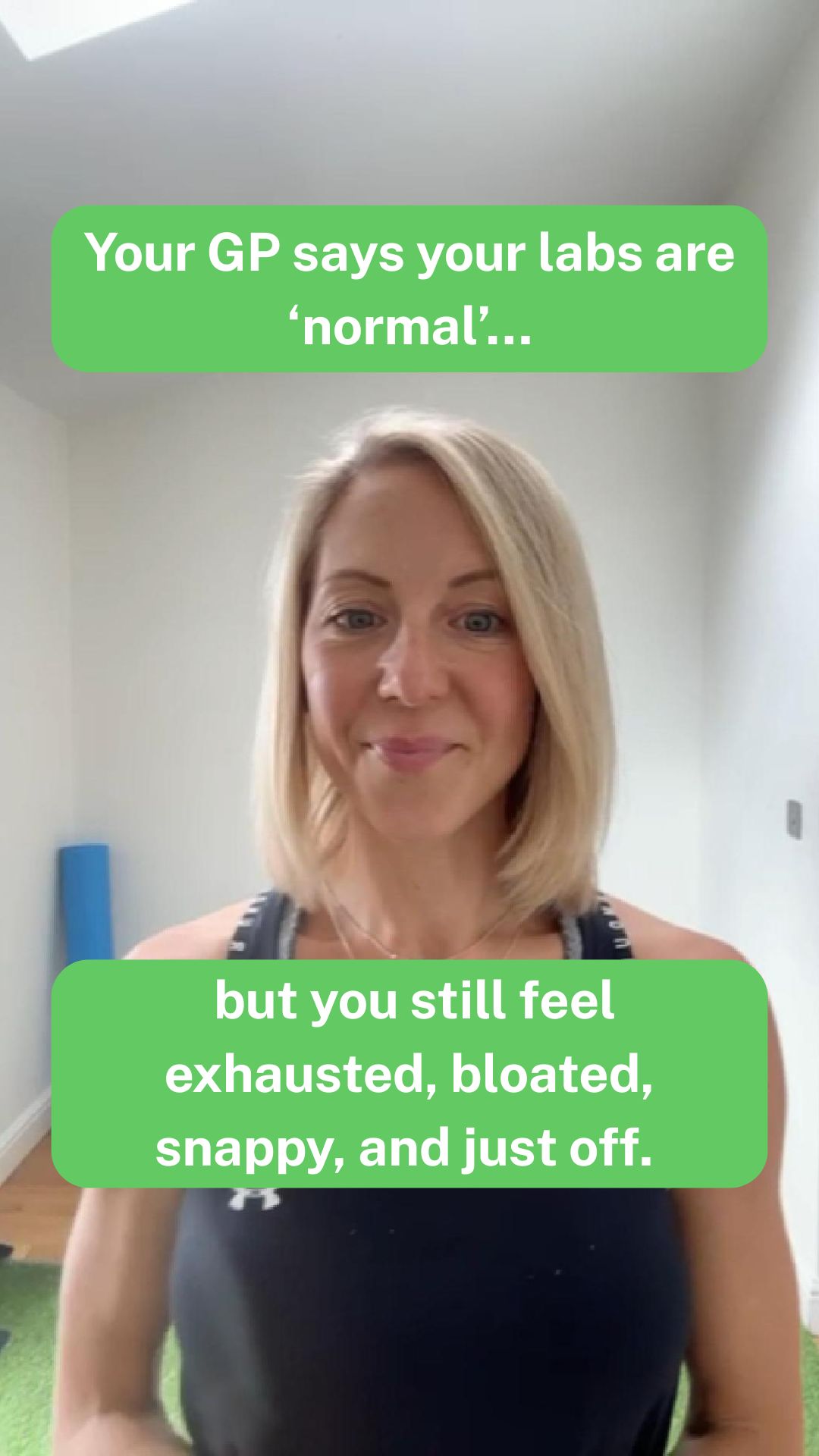
Add this to elevated cortisol from stress and overtraining, and you've got a perfect storm for weight gain: no matter how "good" you're being.
The Missing Piece: Sleep
Here's what most fitness advice completely ignores: poor sleep is one of the primary drivers of perimenopausal weight gain.
When you're waking up at 3am drenched in sweat, or lying awake with your mind racing, your body can gain an additional 0.5-1kg per week. Sleep deprivation keeps cortisol high and lowers progesterone, creating something called oestrogen dominance: where excess oestrogen moves to fat cells and holds on tight.
Without addressing sleep, any weight loss you achieve through diet and exercise alone tends to return within months. Often with extra.
The FRESH Framework™ Approach: Work With Your Body
This is where we flip the script entirely.
Instead of fighting your body with restriction and punishment, we work with your biology. The FRESH Framework™ isn't about eating less: it's about eating differently. It's not about moving more: it's about moving smarter.
Refuel, Don't Restrict
Cutting calories when your metabolism is already under stress is like trying to run a car on fumes. Instead, we focus on:
Protein at every meal to stabilize blood sugar and protect your muscle mass
Healthy fats that support hormone production and keep you satisfied
Strategic carbs timed around your cycle and activity to work with insulin, not against it
Strategic Movement
More exercise isn't the answer. Smarter exercise is.
We swap exhausting cardio for strength training: the most powerful tool for building metabolism-boosting muscle during perimenopause. Two days a week of resistance work beats five days of running yourself into the ground.
We add restorative movement like walking, Pilates, or yoga that supports your nervous system instead of stressing it further.

Stress Recovery
This is the "S" in FRESH that changes everything. When your body feels safe: when cortisol can finally come down: weight loss becomes possible again. We focus on:
Improving sleep quality first (not as an afterthought)
Nervous system regulation through breathwork and mindfulness
Setting boundaries that protect your energy, not drain it
Stop Guessing. Start Understanding.
You don't need another diet. You don't need to push harder.
You need someone who understands that your body in perimenopause requires a completely different strategy: one designed around your unique hormonal profile, your stress levels, your sleep patterns, and your life as a busy professional.
The women I work with are high-achievers who are used to being in control. Perimenopause feels like losing that control. But when you understand what's happening and have a bespoke plan that works with your biology instead of against it, you get that control back.
Ready to stop fighting your body and start working with it?
My 1-1 Lean On Lucy Programme provides the personalized, root-cause support you need to navigate perimenopause without the guesswork, the frustration, or the feeling that you're broken.
👉 Learn more about the Lean On Lucy Programme
Want to talk through your specific situation first?
Let's have a conversation about what's really going on and map out the right path for you.


