Why Tracking is Your Perimenopause Superpower
From "Vague Symptoms" to Vital Data: Why Tracking is Your Perimenopause Superpower
![[HERO] From "Vague Symptoms" to Vital Data: Why Tracking is Your Perimenopause Superpower](https://cdn.marblism.com/LcfSEIRKZSz.webp "[HERO] From \"Vague Symptoms\" to Vital Data: Why Tracking is Your Perimenopause Superpower")
It's another appointment with your GP.
You've tried to explain the exhaustion. The brain fog that makes you forget words mid-sentence in meetings. The way your body feels like a stranger.
"Your bloods are normal," they say, with a reassuring smile that feels anything but.
You walk out holding a prescription for antidepressants or a referral to a therapist. Not because you're not stressed: you are: but because stress isn't the root cause. It's the symptom.
If you've visited your GP lately and walked out feeling like your concerns were brushed off as "just stress" or "standard aging," you aren't alone. For many professional women in the UK, the hardest part of perimenopause isn't just the symptoms: it's the lack of clarity.
You know you're exhausted. You know your brain fog is impacting your focus at work. You know your clothes don't fit the same. But when a doctor asks for specifics, it's easy to feel like your complaints are "vague."
Here's the truth: your symptoms aren't vague. Your data collection just needs an upgrade.
This is where we shift the power back to you. In my FRESH Framework™, we move from guessing to knowing.
Why Data is Your Best Advocate
In perimenopause, your hormones don't just "drop": they fluctuate wildly. One day you're fine; the next, you're an anxious wreck snapping at your team over something minor.
The problem? You're trying to manage a moving target without a map.
Research backs this up. A large NIH study of 1,900 women found that greater engagement with symptom tracking over just 2 months was associated with significant reductions in menopausal symptoms. Women who logged their symptoms daily saw the most improvement: not because tracking magically fixed their hormones, but because awareness changes behaviour.

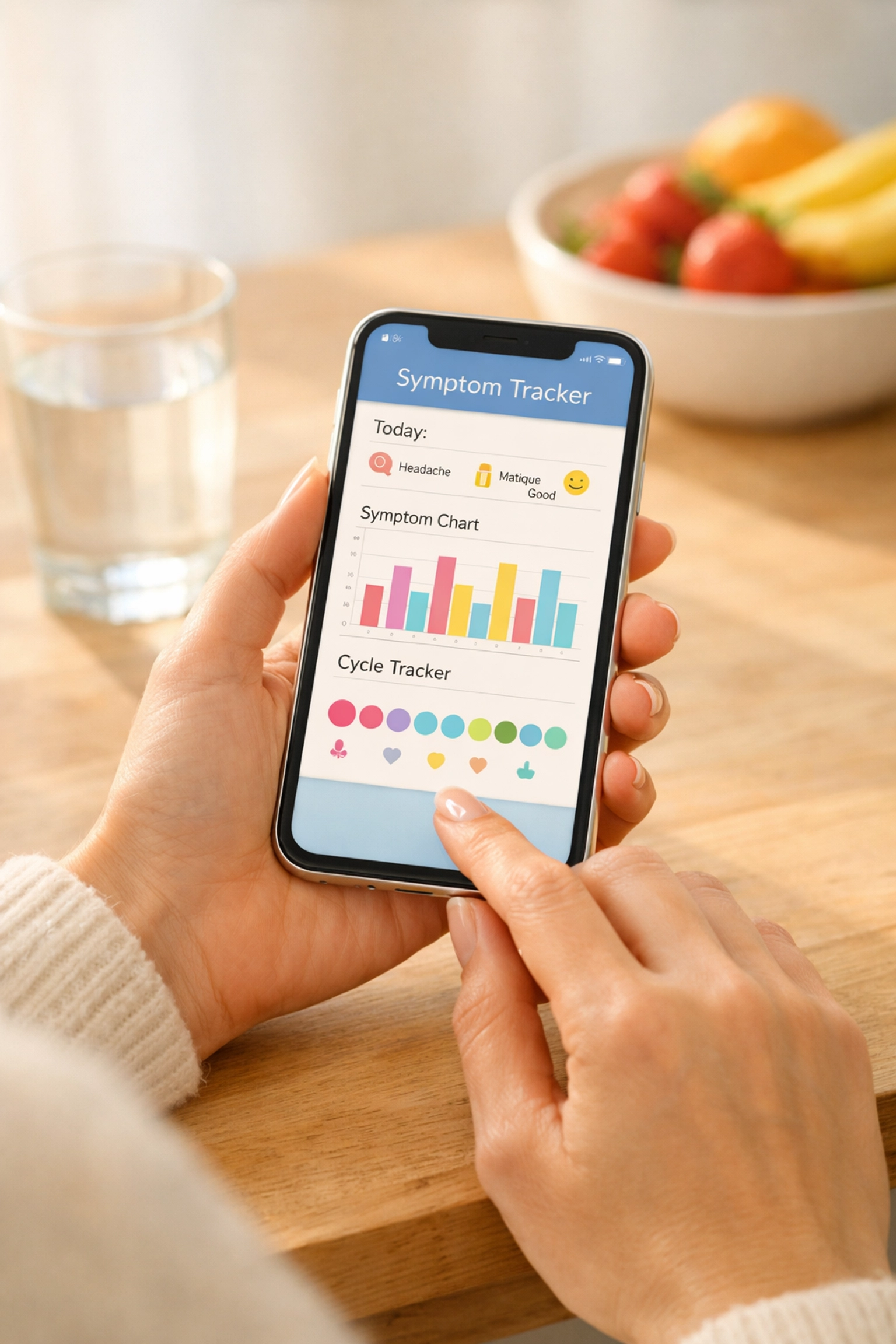
When you track your cycle, sleep, mood, and energy, you transform "I feel tired" into "I experience a significant energy crash and 3 AM wake-ups specifically on days 18–22 of my cycle."
That is data. And data is impossible to dismiss.
More importantly, it helps you and your healthcare provider identify patterns and triggers. Maybe your hot flushes spike after you have wine. Maybe your brain fog is worse in the week before your period. Maybe your anxiety correlates with skipping breakfast.
You can't fix what you can't see.
What Actually Happens When You Start Tracking
Let's be honest: most women resist tracking at first. It feels like one more thing on the to-do list when you're already stretched thin.
But here's what shifts when you commit to it for even 30 days:
You stop spiralling. Instead of feeling like every day is a disaster, you see the pattern. You realize you have 10 really good days, 8 "meh" days, and maybe 4-5 genuinely rough days. That's not failing. That's perimenopause. And suddenly, it feels manageable.
You reclaim your confidence at work. When you know that days 18-24 of your cycle bring brain fog, you can schedule lighter cognitive work during that window. You stop thinking you're "losing it": you're just cycling through a predictable hormone dip.
Your doctor listens differently. A systematic review of 18 studies found that prolonged symptom diary use significantly improved patient-doctor communication and medical decision-making. When you walk into an appointment with concrete data: not just "I feel tired": you're taken seriously.
Step Action: Take the Quiz & Start the Map
If you're ready to stop the guesswork and start understanding your body's unique biological language, here is where you start:
The Perimenopause Clarity Quiz: Take 2 minutes to identify which of your symptoms are hormonal vs. lifestyle-based. It's the quickest way to see the "big picture." This isn't about labelling yourself: it's about clarity.
Start Your 30-Day Tracker: Don't just track your period. Track your "career performance" days: when is the brain fog at its worst? When are you most reactive in meetings? When does your energy tank?
Identify Your Triggers: The research is clear: tracking combined with trigger identification produces better results than symptom monitoring alone. Notice what happens when you have alcohol, skip meals, sleep poorly, or face high-stress days.
You don't need a fancy app (though they help). A simple notes app on your phone or a paper journal works just as well. What matters is consistency.
The Patterns You'll Start to See
After tracking for just a few weeks, most of the women I work with notice:
The caffeine connection: That afternoon slump you're trying to fix with another coffee? It's making your sleep worse, which crashes your cortisol rhythm, which tanks your energy the next day. It's a loop.
The blood sugar rollercoaster: Brain fog at 11 AM and 3 PM? That's likely blood sugar dips. Your body is struggling with insulin resistance, and tracking helps you see exactly when it happens.
The stress amplifier: You thought you were managing stress well: but tracking shows you that your worst symptom days follow high-pressure work weeks or poor sleep. Your nervous system is screaming for support.
This is where the magic happens. You move from "I feel terrible and I don't know why" to "I see the pattern, and I can adjust accordingly."

Take the First Step
You don't have to figure this out in a vacuum. Most of the women I work with are high-achievers who are used to being in control: and perimenopause feels like losing that control.
Tracking is the first step to getting it back.
But tracking alone isn't the finish line. It's the starting point for a root-cause strategy tailored to your body, your life, and your goals.
Ready to see what's really going on?
Let's look at your data together and build a bespoke plan that actually works for your lifestyle.
👉 Book a Consultation with a UK Perimenopause Coach
Looking for intensive, personalized support?
My 1-1 Lean On Lucy Programme is designed for professional women who want a root-cause fix and a private partner in their health journey.
👉 Explore Lean On Lucy
You're not guessing anymore. You're gathering intelligence. And that changes everything.


