How Protein Supports Hormone Balance (And Why You Need More of It)
How Protein Supports Hormone Balance (And Why You Need More of It)
![[HERO] How Protein Supports Hormone Balance (And Why You Need More of It)](https://cdn.marblism.com/_1JfACIUFfy.webp "[HERO] How Protein Supports Hormone Balance (And Why You Need More of It)")
You're doing everything "right."
You've cut the carbs. You're hitting the gym. You're avoiding sugar like the plague. But you're still exhausted by 11 AM, "hangry" by 3 PM, and noticing that your muscles feel softer despite all the effort.
Sound familiar?
Here's what no one tells you: You're probably not eating enough protein. And if you're navigating perimenopause, that missing piece is quietly sabotaging everything else you're trying to do.
Let me explain why this matters, and why protein isn't just another "macro" to track. It's the foundation your hormones are literally built on.
Your Hormones Are Made of Protein (Yes, Really)
This might sound too simple, but it's biochemistry: Many of your hormones are made from amino acids. That's protein.
Insulin, which controls your blood sugar? Protein.
Growth hormone, which helps repair your cells and maintain muscle? Protein.
Leptin, the hormone that tells you you're full? Also protein.
If you're not eating enough high-quality protein, your body doesn't have the raw materials it needs to produce these hormones. It's like trying to build a house without bricks: you can have all the plans in the world, but nothing gets built.
And during perimenopause, when your oestrogen and progesterone are already on a rollercoaster? Your body needs more support, not less.
Three Ways Protein Saves Your Sanity (And Your Waistline)
1. The Blood Sugar Stabiliser
This is the big one.
You know that mid-afternoon crash? The one where you find yourself staring into the fridge or hovering over the biscuit tin like it holds the answers to all of life's problems?
That's not a lack of willpower. That's unstable blood sugar.
When you eat protein with every meal, it slows down the absorption of glucose into your bloodstream. This keeps your insulin: the master hormone: steady. No more spikes. No more crashes. No more "hanger."
Stable insulin means stable energy. It also means your body isn't constantly storing fat around your middle, which is what happens when insulin is spiking all day long.
2. The Muscle Bodyguard
As oestrogen drops during perimenopause, you naturally start to lose muscle mass faster. This isn't "just aging": it's a hormonal shift.
And here's the problem: Less muscle means a slower metabolism. It also means weaker joints, more aches, and that frustrating "soft" feeling, even if the scales haven't moved.
Protein is the fuel your muscles need to repair and rebuild. Aim for 25-30g of protein at every meal: not just at dinner. Your body can only use so much protein at once, so spreading it across the day is key.
More muscle = higher metabolism = more energy = better mood. It's all connected.
3. The Hunger Crusher
Have you noticed that you can't seem to feel full anymore? Or that you're thinking about food constantly, even after you've just eaten?
That's your hunger hormones: ghrelin (the "I'm hungry" hormone) and leptin (the "I'm full" hormone): out of balance.
Protein regulates both. It increases leptin and decreases ghrelin, which means you feel satisfied after meals and aren't battling cravings all day.
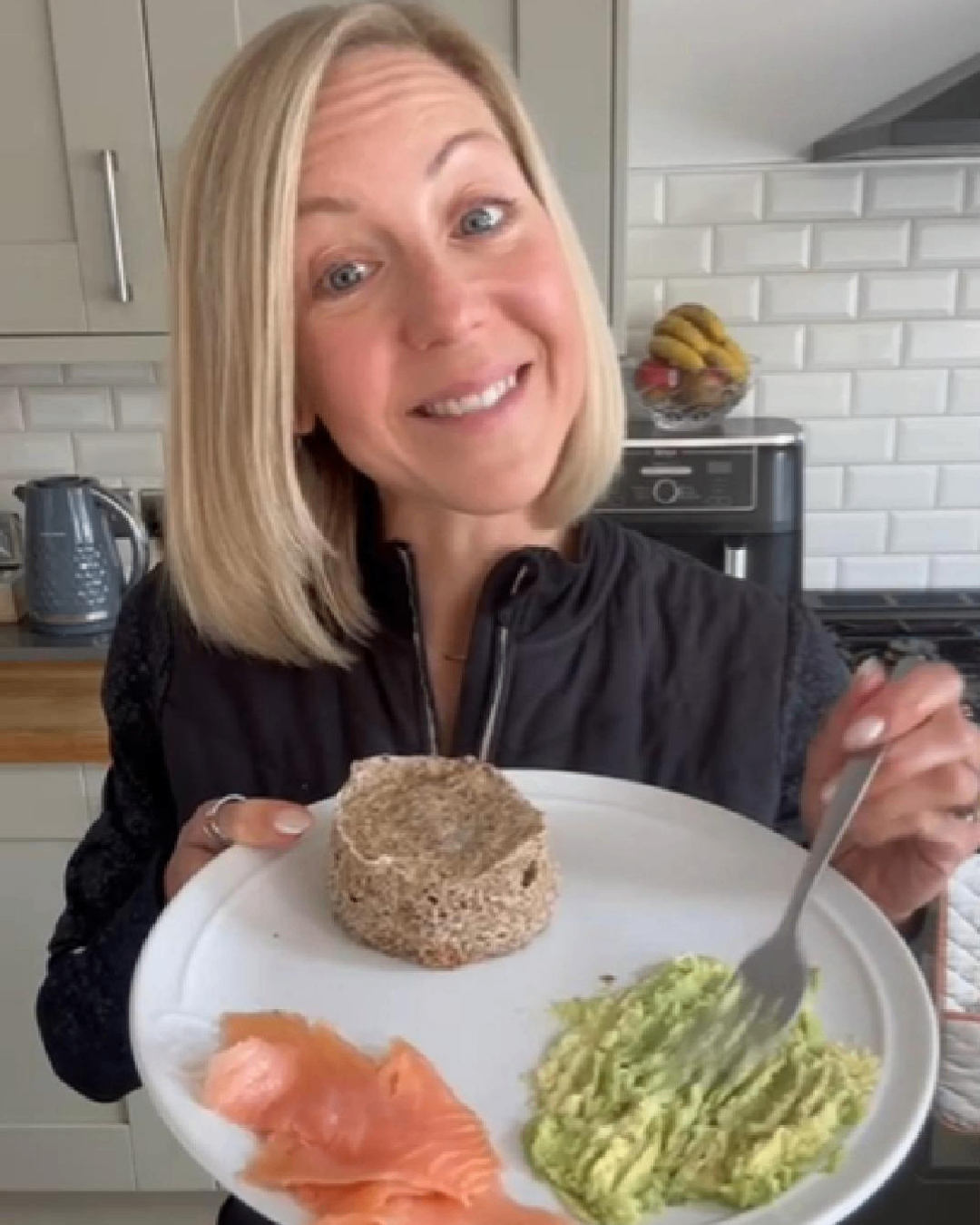
If your breakfast is toast and jam, you'll be hungry again in an hour. If your breakfast is eggs with avocado and smoked salmon, you'll sail through to lunch without even thinking about food.
That's the power of protein.
The FRESH Approach to Fuel
In my FRESH Framework™, the F stands for Fuel.
We don't do restrictive diets. We don't do "quick fixes" or meal replacement shakes. We focus on giving your body exactly what it needs to thrive during this transition.
And for most women in their 40s and 50s, that means prioritizing protein at every meal.
Here's what that looks like in practice:
Breakfast: 2-3 eggs, Greek yogurt with nuts and seeds, or smoked salmon with whole grain toast.
Lunch: Grilled chicken or tofu with a big salad and quinoa, or a lentil and vegetable soup with a side of hummus.
Dinner: Salmon, lean beef, or chickpea curry with plenty of vegetables and a small portion of rice or potatoes.
Snacks: A handful of almonds, a protein smoothie, or cottage cheese with berries.
Notice something? Protein is the star of the plate, not the side dish.
What About Plant-Based Protein?
You absolutely can support your hormones on a plant-based diet. The key is variety.
Beans, lentils, tofu, tempeh, quinoa, nuts, seeds, and whole grains all provide protein. But plant-based proteins are often "incomplete," meaning they don't contain all nine essential amino acids in the right ratios.
The solution? Mix and match. Combine legumes with grains (like rice and beans), or use a variety of sources throughout the day. Your body will piece together the full amino acid profile it needs.
If you're vegan or vegetarian, you may need to eat slightly more protein overall to hit the same muscle-building and hormone-supporting effects.
How Much Protein Do You Actually Need?
Here's where most women get it wrong: You need more than you think.
The general recommendation is about 1.2–1.6 grams of protein per kilogram of body weight per day for women over 40. That works out to roughly 80-110g per day for most women.
But here's the catch: Your body can only absorb about 25-30g of protein at once. So if you're eating a tiny bit at breakfast, skipping it at lunch, and then loading up at dinner, you're missing out on most of the benefits.
Spread it out. Prioritize it. Make it non-negotiable.
You Don't Have to Feel Like This
Here's what I know after years of working with women just like you: You don't have to feel exhausted, moody, and "off" all the time.
When we get the Fuel right: when we prioritize protein, balance your blood sugar, and support your muscles: everything else starts to fall into place.
Your energy returns. Your mood stabilizes. Your body starts to feel like yours again.
It's not about perfection. It's about giving your body what it needs to do its job.
Ready to build a nutrition strategy that actually works for your hormones?
In my 1-1 Lean On Lucy Programme, we create a personalized plan that fits your life, your preferences, and your goals. No more guessing. Just results.
👉 Start your journey with Lean On Lucy
Not sure where to start?
Let's have a one-to-one conversation about your symptoms and see how we can support your hormones through nutrition and lifestyle.
👉 Book your private Consultation


