HIIT and Perimenopause Belly Fat: Why Harder Isn't Better | Health Coach Lucy
Why Your HIIT Class is Making You Tired (and Holding Onto Belly Fat)
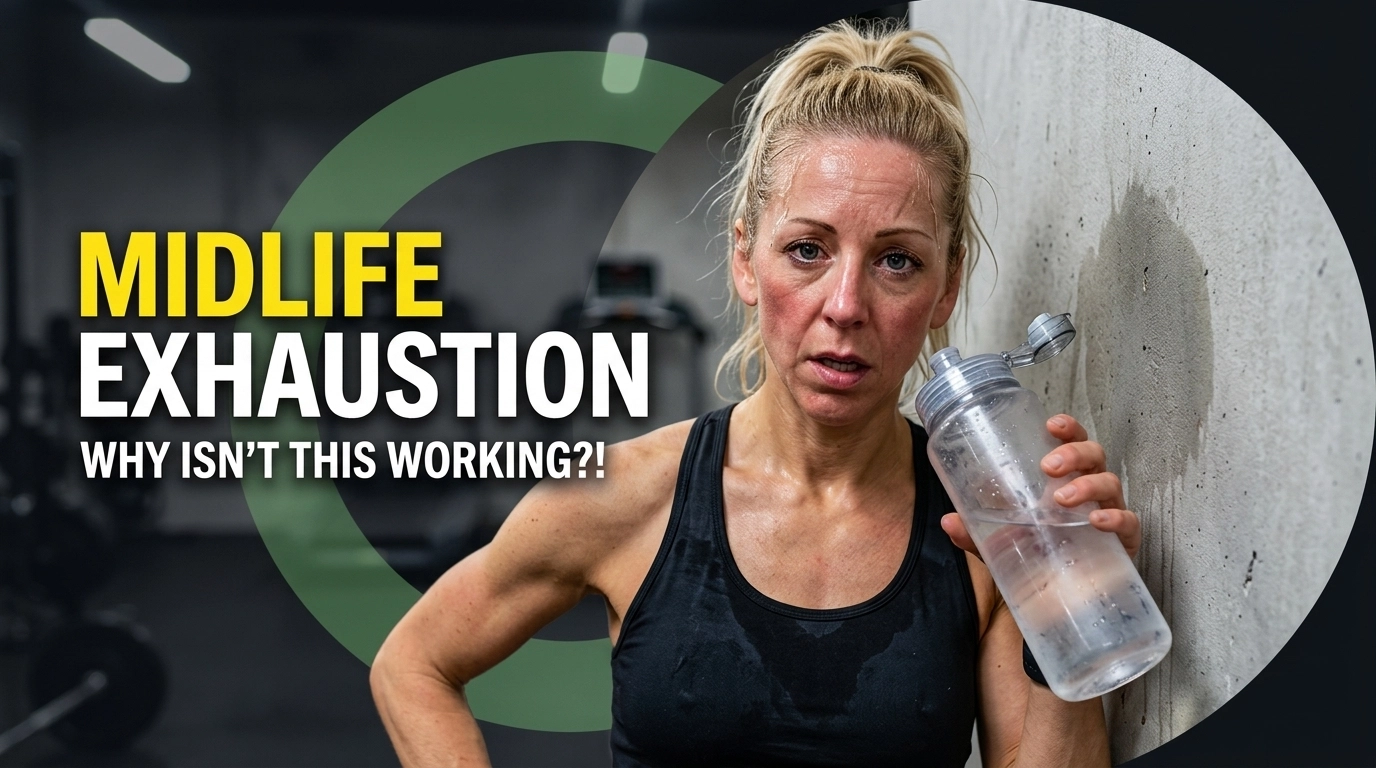
You’re the one who holds it all together. You’ve always been capable, driven, and, honestly: pretty good at pushing through. When things get tough, you work harder. When the weight starts to creep up or your energy flags, your instinct is to double down.
So, you sign up for that 6 AM HIIT class. You push yourself through the burpees, the sprints, and the sweat, even though you’re running on five hours of broken sleep and three cups of coffee. You tell yourself, “I just need to be more consistent.”
But here’s the thing: you’re doing everything right… but your body isn't responding.
In fact, it feels like it’s fighting back. You’re more exhausted than ever, your brain feels like it's stuck in a thick fog by 3 PM, and despite all that sweating, your clothes are feeling tighter around the middle.
If this sounds familiar, I want you to take a deep breath. It’s not a willpower problem. It’s a hormone pattern.
The HIIT Paradox: When "Harder" Isn't Better
We’ve been conditioned to believe that if we want results, we have to suffer for them. High-Intensity Interval Training (HIIT) is often sold as the ultimate fat-burner. And in your 20s and early 30s, it probably worked beautifully.
But as we enter perimenopause, the rules of the game change.
Your body is going through a massive hormonal recalibration. Estrogen and progesterone: the hormones that once helped you manage stress and recover quickly: are beginning to fluctuate and decline. Without that protective hormonal buffer, your body becomes much more sensitive to stress.
When you do an intense HIIT workout, your body doesn't see "fitness." It sees stress. It spikes your cortisol (your primary stress hormone) to give you the energy to survive the "threat."
For a high-functioning woman already juggling a career, family, and the internal chaos of perimenopause, that HIIT class is just adding stress on top of stress. Instead of burning fat, you're sending a signal to your brain that says: "We are in danger. Hold onto every ounce of energy (fat) we have."
Why Cortisol Loves Your Middle
Have you noticed that the weight you’re gaining isn't just anywhere: it’s specifically around your belly?
There’s a biological reason for that. Your abdominal fat cells have significantly more cortisol receptors than fat cells elsewhere in your body. When your cortisol is chronically elevated: whether from a stressful job, poor sleep, or an overly intense workout: it acts like a magnet for fat storage right in the midsection.
This is what I call the "Perimenopause Belly Fat Trap."
By pushing through intense cardio while your nervous system is already overstimulated, you’re essentially coaching your body to store fat around your organs. This isn't about calories; it's about the chemical signal you're sending to your metabolism.
The "Wired but Tired" Cycle
If you’re doing HIIT and finding yourself gaining weight despite exercise, you’re likely also experiencing the "wired but tired" phenomenon.
It looks like this:
You’re exhausted all day, relying on caffeine to get through the 3 PM slump.
You push through a workout, feeling a temporary "high" from the adrenaline.
By 9 PM, you’re physically spent, but your mind is racing.
Then comes the classic 3 AM cortisol spike. You wake up suddenly, heart racing, mind churning through your to-do list, and you can’t get back to sleep until 5:30 AM: just in time for your alarm to go off.
Your nervous system is stuck in overdrive. It has forgotten how to switch off because it’s constantly being flooded with stress hormones.
A Better Way: Nervous System First, Weight Loss Second
If you want to shift the belly fat and find your energy again, we have to change the goal. We have to move from "burning calories" to "calming the nervous system."
When your body feels safe, it will naturally let go of the weight it's been hoarding for "protection." Here is how we start doing that:
1. Swap HIIT for Strength Training
Instead of jumping and sprinting, focus on slow, controlled resistance training. Lifting weights builds muscle mass (which we naturally lose during perimenopause) and improves insulin sensitivity without sending your cortisol into the stratosphere.
Aim for 2–3 sessions a week where you feel challenged but not completely depleted. You should leave the gym feeling stronger, not like you need a three-hour nap.

2. Embrace the Power of "Nervous System Walks"
Never underestimate the power of a 20-minute walk in nature. This isn't about "getting your steps in" for the sake of a tracker. It’s about down-regulating your nervous system. Low-impact movement at a conversational pace tells your brain that the "threat" is over. It helps clear excess cortisol and improves your chances of sleeping through to 6 AM.
3. Prioritize Recovery as a "Workout"
In perimenopause, your recovery is just as important as the movement itself. If you had a terrible night’s sleep, the most "productive" thing you can do for your health isn't a HIIT class: it’s an extra hour of rest or a gentle yoga session.
This isn't "giving up." It's working with your biology instead of against it.
How to Tell if Your Workout is Working
If you’re worried that slowing down will make you gain more weight, I want you to look for these "Non-Scale Victories" instead:
You’re sleeping through the night (no more 2 AM–4 AM wake-ups).
Your 3 PM energy crash disappears.
Your brain fog starts to lift, and you feel sharper at work.
You feel less "puffy" or bloated by the end of the day.
Your mood feels more stable, and you aren't as easily overwhelmed.
These are the signs that your hormones are coming back into balance. When these things happen, the weight loss follows naturally, and it stays off because you aren't fighting your own chemistry.
You Don't Have to Guess Anymore
I know it’s confusing. You’re bombarded with advice telling you to "eat less and move more," but your body is telling you a different story.
You deserve a clear, root-cause approach that actually works for the woman you are now, not the woman you were ten years ago.
If you’re ready to stop the "wired but tired" cycle and finally understand what’s happening beneath the surface, I’m here to help.
Ready to find out exactly where your hormones stand?
Take my Hormone Imbalance Quiz to get a clearer picture of what’s driving your symptoms.
Want a personalized plan to get your energy back?
Let’s talk. You can book a 1:1 consultation here to discuss how we can get you feeling like yourself again.
You’ve spent enough time pushing uphill. It’s time to start working with your body.


