Signs of Perimenopause at 40: Why You Feel 'Off' | Health Coach Lucy
Signs of Perimenopause at 40: Why You Feel 'Off' (and It's Not Just Stress)
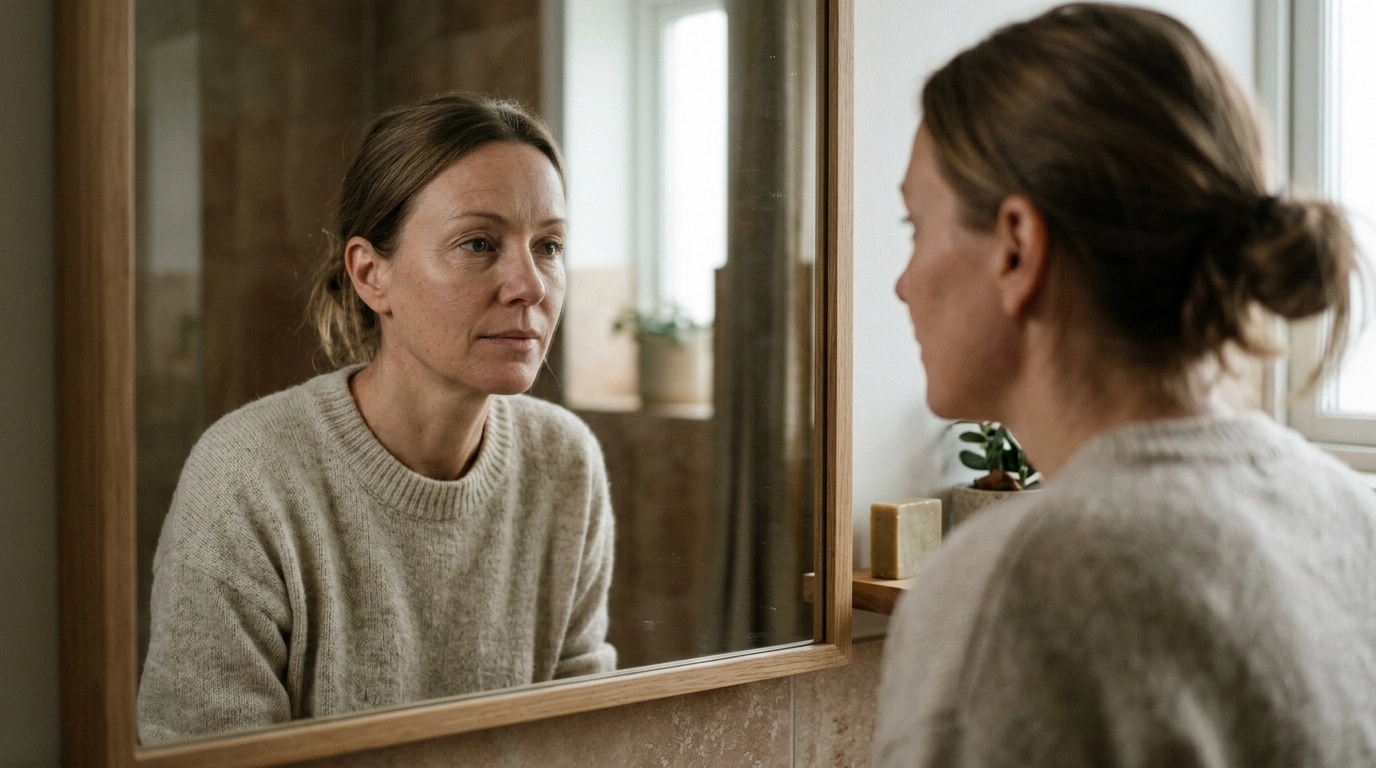
You’re used to being the one who holds everything together.
For years, you’ve navigated a high-pressure career, managed a busy household, and prided yourself on being the “capable” one. You’ve always been health-conscious, too. You know your way around a gym, you eat your greens, and you’ve never been one to complain about a little bit of tiredness.
But lately, something has shifted.
You feel… off.
Maybe it’s the way you suddenly snapped at your partner over nothing. Maybe it’s the fact that you’re waking up at 3 AM with your heart racing, even though nothing is "wrong." Or perhaps it’s the way your favourite jeans are suddenly feeling uncomfortably tight around your middle, despite the fact that you haven't changed a thing about your diet.
When you mention it to your GP or even your friends, the response is usually the same: “You’re just stressed, Sarah. You’re 42: you’re just busy. It’s normal for your age.”
I’m here to tell you: You aren’t imagining this. And it isn’t "just" stress.
If you are doing everything right but your body is no longer responding, you aren't failing. You are likely entering perimenopause, and it starts much earlier than most women realize.
Why "Just Stress" is a Dismissive Trap
In your early 40s, the common narrative is that you are in the "prime of your life" and therefore too young for the "M" word. But the transition: perimenopause: can actually begin up to 10 years before your periods stop.
The reason you feel "off" is that your hormonal foundation is shifting. Specifically, your progesterone levels are starting to dip.
Progesterone is your "nature’s Valium." It’s the hormone that keeps you calm, helps you sleep, and buffers you against stress. When progesterone drops, your nervous system loses its shield. Suddenly, the stress you used to handle with ease feels like an insurmountable mountain.
This isn't a willpower problem. This is a hormone pattern.

The 4 Subtle Signs You’re Not "Just Tired"
While we often wait for the "big" symptoms like hot flushes (which you can read more about in my guide to hot flushes and night sweats), the early signs of perimenopause at 40 are often much more subtle and psychological.
1. The 3 AM Cortisol Spike
This is the classic "wired but tired" feeling. You fall asleep easily because you're exhausted, but then: like clockwork: you’re wide awake at 3 AM. Your mind is racing, you feel a sense of dread, and you can't get back to sleep until 5 minutes before your alarm goes off.
This isn't just a "bad night's sleep." It’s often a sign that your blood sugar is dropping or your cortisol is spiking because your body no longer has the progesterone to keep things steady.
2. Sudden, Unexplained Anxiety
You’ve always been confident. But now, you find yourself feeling anxious about things that never used to bother you: driving on the motorway, giving a presentation at work, or even just the social demands of the weekend. This "new" anxiety is a hallmark sign of the shifting hormone landscape.
3. The "Cortisol Belly"
You’re doing the same workouts and eating the same "healthy" meals, but your body shape is changing. You’re gaining weight around your middle, and no matter how many HIIT classes you do, it won’t budge. In fact, the more you push yourself, the more tired and bloated you feel.
4. Brain Fog and "Losing Words"
Have you ever walked into a room and forgotten why? Or found yourself mid-sentence, unable to find a very simple word? It’s frustrating and, frankly, a bit scary for a high-functioning woman. It makes you feel like your brain is slower than it used to be.

It’s Not a Lack of Effort: It’s a Lack of Support
Most women in their 40s respond to these symptoms by trying harder.
They cut more calories.
They drink more coffee to push through the brain fog.
They add another spinning class to "burn off" the belly fat.
But here is the truth: Your body is not a calculator; it’s a chemistry set.
When your nervous system is stuck in overdrive, adding more "stress" (like restrictive dieting or intense exercise) actually tells your body to hold onto fat and shut down your energy production. This is why you feel so exhausted even after a full night's sleep.
The Cortisol-First Approach
At Health Coach Lucy, we don't lead with calories or restriction. We lead with the nervous system.
If we can regulate your cortisol rhythm, we can stop the 3 AM wake-ups. If we can stabilize your blood sugar, we can stop the 3 PM crashes. If we can provide the right nutrients for your hormones, we can clear the brain fog.
This is exactly what I guide women through in my REFRESH Framework™. We look at the root cause, not just the surface-level symptoms.

Where Do You Start?
I see you. I know how heavy it feels to be "the one" for everyone else while you feel like you're losing your grip on yourself. This is real, it’s hormonal, and: most importantly: it can get better.
You don't need more willpower. You need a clear, root-cause solution that actually works for a woman in her 40s.
Here are three things you can do right now:
Stop the HIIT: If you’re feeling "wired but tired," swap one high-intensity workout for a 20-minute walk in nature or some gentle yoga. Give your nervous system a chance to feel safe.
Take the Quiz: If you aren't sure if what you're feeling is "just stress" or something more, take my Hormone Imbalance Quiz. It’s designed to help you get clarity on what’s actually happening in your body.
Book a Consultation: If you’re ready to stop guessing and start feeling like yourself again, let’s talk. You can book a consultation here. We’ll dive into your specific symptoms and map out a path to getting your energy and focus back.
You don’t have to do this alone. You’re used to being the capable one, but even the strongest women need a guide sometimes.
Let's get you sleeping through to 6 AM, feeling clear-headed at work, and finally feeling back in control of your body.


